Kanawha County Dog Registration Information
Service Dogs and Emotional Support Animals in Kanawha, West Virginia
If you’re asking where do I register my dog in Kanawha County, West Virginia for my service dog or emotional support dog, the key point is this: a dog’s legal service-dog status (or emotional support animal status) is separate from getting a dog license in Kanawha County, West Virginia. In practice, most “registration” people mean is the county or city dog tax / dog tag process—plus staying current on rabies vaccination.
This page explains where to register a dog in Kanawha County, West Virginia, which agencies typically handle animal control dog license Kanawha County, West Virginia questions, what documents you may need, and how service dogs and emotional support animals (ESAs) fit into the rules.
Where to Register or License Your Dog in Kanawha County, West Virginia
Because dog licensing is handled locally, you may need to contact a county office (often tied to assessment/tax and dog tags) and, depending on where you live, your city’s animal control/humane officer system. Below are several official or locally responsible offices that residents commonly contact for dog tags, rabies/public health guidance, and animal control questions within Kanawha County.
Official offices (examples within Kanawha County)
| Office | Address | Phone | Hours | |
|---|---|---|---|---|
| Kanawha County Assessor’s Office (Dog Tags / Dog Tax) |
Mailing Address: 409 Virginia Street East Charleston, WV 25301 |
(304) 357-0250 | Dog Tags contact listed: mprouse@kanawhacountyassessor.com | Not published on the office contact page |
| Kanawha County Sheriff’s Office — Tax Office (Tax Division contact) | Address not listed on the tax contact page (Charleston office) | (304) 357-0210 | Not published on the tax contact page | Monday–Friday, 8:00 a.m.–5:00 p.m. |
| Kanawha-Charleston Health Department (Public health / rabies guidance) |
108 Lee Street East Charleston, WV 25301 |
(304) 344-5243 | Not published on the main page (see their contact options) |
8:00 a.m.–4:00 p.m. (Mon–Fri) Open until 6:00 p.m. Tuesday |
| Kanawha-Charleston Humane Association (Animal shelter / humane officer coordination) |
1248 Greenbrier Street Charleston, WV 25311 |
(304) 342-1576 | info@adoptcharleston.com |
Monday: Closed Tue–Fri: Noon–6:00 p.m. Sat–Sun: Noon–5:00 p.m. |
| City of Charleston / Metro 911 (Animal control dispatch for certain municipalities) | Not listed here (varies by city/dispatch) | (304) 348-8111 | Not provided | Not provided |
Overview of Dog Licensing in Kanawha County, West Virginia
What “registering” a dog usually means
In Kanawha County, “registering” typically refers to obtaining a yearly dog tag after paying the local dog tax (sometimes called a head tax). West Virginia state law sets a framework for dog registration/tags, and counties administer the process locally. In Kanawha County, the Assessor’s office publishes guidance indicating it collects a yearly head tax on each dog that is six months of age or older and mails dog tags after processing.
Dog licenses are local—county and city rules can both apply
A dog license in Kanawha County, West Virginia is often handled through local county government processes, and additional city requirements can exist depending on your address. That’s why “animal control dog license Kanawha County, West Virginia” questions sometimes involve multiple offices: the county office that issues tags and the city/county animal control or humane officer system that enforces nuisance, leash, bite reporting, and related ordinances.
Rabies vaccination is a core compliance item
While the dog tag process is local, rabies prevention is a public health issue. Keep your dog’s rabies vaccination current and retain documentation (certificate or veterinarian record). If you have rabies exposure concerns (bite, contact with wildlife, or a suspected rabid animal), contact the local health department for guidance.
How Dog Licensing Works Locally in Kanawha County, West Virginia
Step 1: Confirm which jurisdiction you live in
Your first step is confirming whether you live in:
- Unincorporated Kanawha County (county processes apply; enforcement may be coordinated through county channels), or
- Inside a municipality (such as Charleston or another city/town within Kanawha County), where additional local rules and animal control processes may apply.
Step 2: Apply/pay for your dog tag through the county process
The Kanawha County Assessor’s office provides public guidance that it collects a yearly dog head tax for dogs six months or older and mails dog tags to the address listed on the assessment/application. Their guidance also indicates the fee and that payment is typically made by check or money order and that cash is not accepted by mail.
Step 3: Keep the tag accessible and records organized
After you receive your tag, keep it with your records and follow local instructions about displaying it (commonly on the dog’s collar). Store your documentation in a single folder (digital or paper) that includes rabies proof, your dog’s description, and any licensing receipts.
Step 4: Know who enforces what (animal control vs. licensing)
Licensing/tags and animal control are related but not identical. Licensing/tags are generally tied to the local tax/tag process, while animal control focuses on public safety and ordinance enforcement (leash issues, stray pickup, bite reports, cruelty investigations, and nuisance complaints). In parts of Kanawha County, humane officer coordination and municipal dispatch may route through local emergency/non-emergency lines.
Service Dog Laws in Kanawha County, West Virginia
A service dog is not “licensed” by a registry
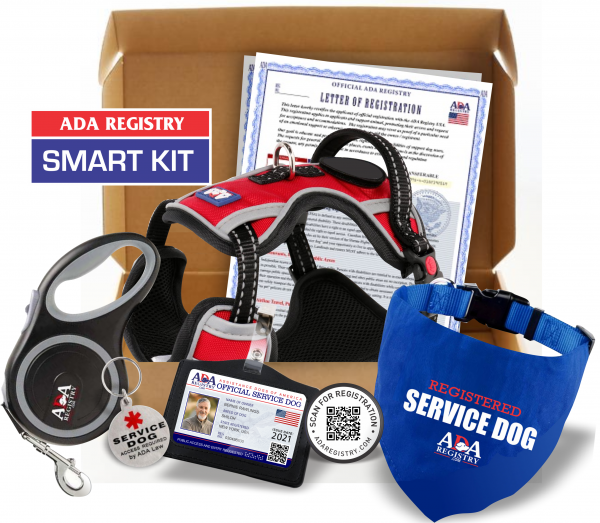
A service dog is generally defined by its training to perform tasks for a person with a disability. There is no single government “service dog registration” that replaces local licensing. Even if your dog is a service dog, you typically still handle local requirements like a county/city dog tag and rabies compliance.
Dog license vs. service dog status (why they are different)
| Item | What it is | Who issues/controls it | What it affects |
|---|---|---|---|
| Dog license / dog tag | Local registration/tax tag for a dog | County/city local government (varies by location) | Local compliance; identification; may matter for enforcement/impound situations |
| Service dog status | A dog trained to do work/tasks for a person with a disability | Defined by law and function/training, not by an online registry | Public access rights in many settings; reasonable accommodations |
Practical guidance for Kanawha County residents
- Get (and renew) your local dog tag even if the dog is a service dog, unless your local jurisdiction provides a specific exemption or special process.
- Keep rabies documentation current and easy to produce if requested by animal control, a housing provider, or in the event of a bite report.
- If you encounter conflicting advice, verify with the county office that handles dog tags and your city’s animal control/humane officer system.
Emotional Support Animal Rules in Kanawha County, West Virginia
ESAs are not the same as service dogs
An emotional support animal (ESA) provides comfort by its presence, but it is not necessarily trained to perform specific tasks that mitigate a disability the way a service dog is. Because of that difference, ESAs generally do not have the same public-access rules as service dogs. However, ESAs can matter in certain housing contexts when proper documentation is provided through appropriate channels.
Dog licensing still applies to ESAs
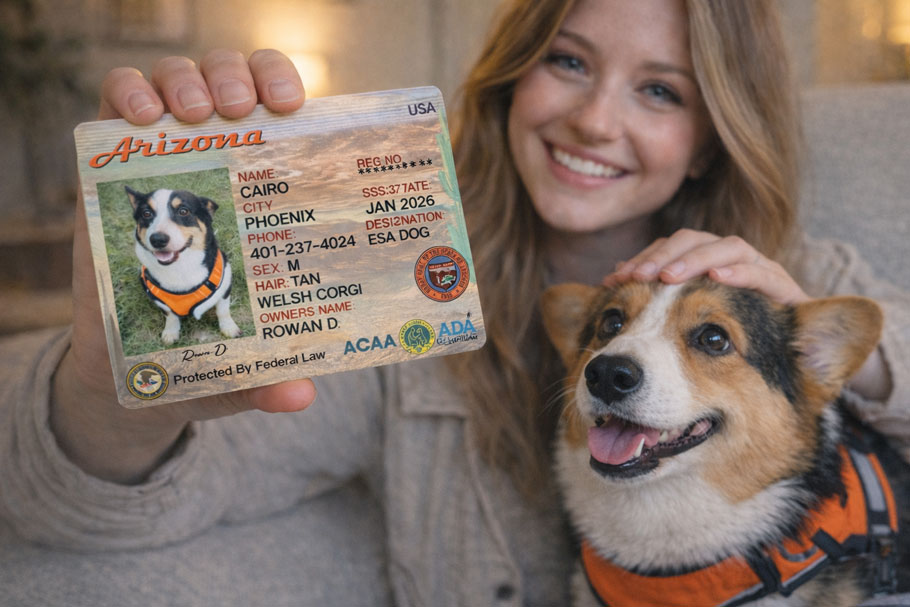
If your dog is an ESA, you still typically need a dog license in Kanawha County, West Virginia (dog tag/dog tax) and to comply with rabies vaccination requirements. “ESA registration” purchased online is not a substitute for local licensing.
Best practice: keep a simple compliance packet
To avoid delays when renting, traveling, or responding to a local inquiry, keep: (1) rabies proof, (2) dog tag/licensing receipt, (3) your ID and proof of address, and (4) any documentation you use for ESA accommodation requests (kept private and shared only when needed).
Frequently Asked Questions
Register A Dog In Other West Virginia Counties
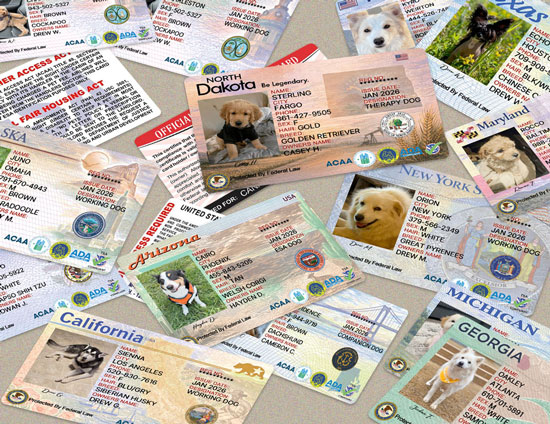
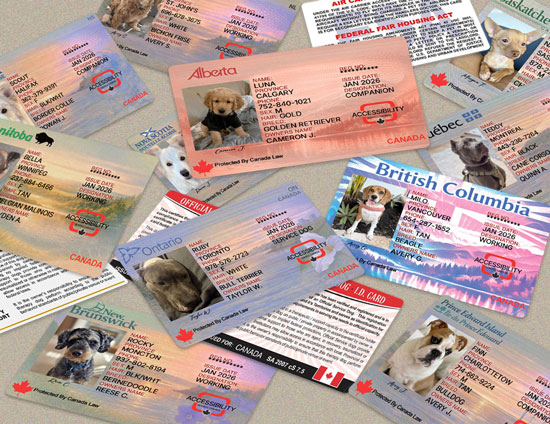
Select your county below to get started with your dog’s ID card. Requirements and license designs may vary by county, so choose your location to see the correct options and complete your pup’s registration.
- Barbour County Dog Registration
- Berkeley County Dog Registration
- Boone County Dog Registration
- Braxton County Dog Registration
- Brooke County Dog Registration
- Cabell County Dog Registration
- Calhoun County Dog Registration
- Clay County Dog Registration
- Doddridge County Dog Registration
- Fayette County Dog Registration
- Gilmer County Dog Registration
- Grant County Dog Registration
- Greenbrier County Dog Registration
- Hampshire County Dog Registration
- Hancock County Dog Registration
- Hardy County Dog Registration
- Harrison County Dog Registration
- Jackson County Dog Registration
- Jefferson County Dog Registration
- Lewis County Dog Registration
- Lincoln County Dog Registration
- Logan County Dog Registration
- Marion County Dog Registration
- Marshall County Dog Registration
- Mason County Dog Registration
- McDowell County Dog Registration
- Mercer County Dog Registration
- Mineral County Dog Registration
- Mingo County Dog Registration
- Monongalia County Dog Registration
- Monroe County Dog Registration
- Morgan County Dog Registration
- Nicholas County Dog Registration
- Ohio County Dog Registration
- Pendleton County Dog Registration
- Pleasants County Dog Registration
- Pocahontas County Dog Registration
- Preston County Dog Registration
- Putnam County Dog Registration
- Raleigh County Dog Registration
- Randolph County Dog Registration
- Ritchie County Dog Registration
- Roane County Dog Registration
- Summers County Dog Registration
- Taylor County Dog Registration
- Tucker County Dog Registration
- Tyler County Dog Registration
- Upshur County Dog Registration
- Wayne County Dog Registration
- Webster County Dog Registration
- Wetzel County Dog Registration
- Wirt County Dog Registration
- Wood County Dog Registration
- Wyoming County Dog Registration